
Nicolas Demorand is a French journalist who for many years hosted the morning news program on the national radio station France Inter. However, since 2025, he has had to stop working due to psychiatric disorders (commonly referred to as mental illness).
Initially, he decided to share this ordeal and his experience in a book titled Intérieur nuit (Interior night), in which he describes his type 2 bipolar disorder and how it impacts his personal and relational life.
“I am a mentally ill person” is the very first sentence of his book. It carries the provocative intent of making mental health less ostracised and better understood. While his book is a genuine bestseller, it will unfortunately most likely not be translated into either English or Chinese.
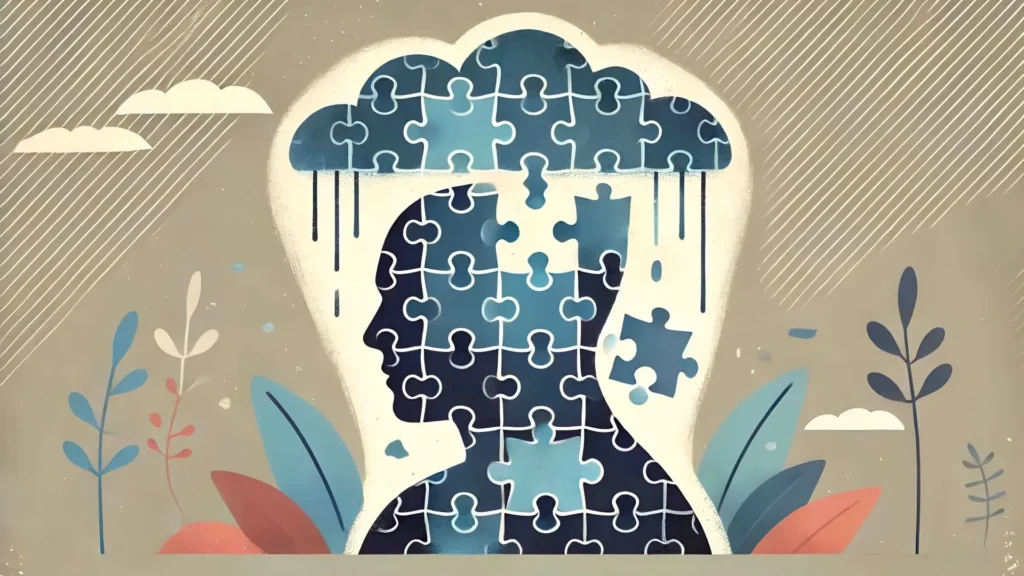
Recently, Nicolas Demorand also produced an audio podcast in which he speaks about his recent institutionalisation in a psychiatric hospital. He shares intimate and powerful moments, driven by precise and evocative descriptions of his hallucinations. It is the first episode of this podcast, titled “Si besoin” (If Needed), that I am sharing with you here, as it moved me on several occasions.
Having been interested in psychology for several years, I have also taken an interest in mental illnesses, as the line between the two is sometimes very thin; it seems essential to me to be aware of this.
Furthermore, someone who is very close to me today has to support a family member suffering from one of these disorders. We discuss it often. I usually content myself with simply listening. Sometimes, she asks me for advice; I offer it then, without being intrusive or directive, always leaving room for doubt and most often keeping my raw judgements to myself, fully aware of my own feelings.
The second value of this audio podcast is the way it leads us to question how we all view mental health.
It is obvious that psychiatric disorders are viewed and judged differently from somatic (physical) illnesses, both by our society and by those who suffer from them. And yet, if we accept that our physical body can be afflicted by illness, why should it be any different for our brain?

Psychiatric disorders strike any of us indiscriminately, just as somatic conditions such as cancer, viruses, or degenerative diseases do, without any direct cause-and-effect relationship being found in many cases. It is the simple injustice of nature, which dictates that we suffer individually so that the global system can continue to exist.
Intellectually, this is a given for me. I can 100% accept the idea that mental disorders are just illnesses like any other, but I am not sure I could subscribe to it if it applied to myself. How would I react if something of this nature happened to me?
My emotion when listening to this audio certainly stems from my own anxieties related to this, but also from the empathy I feel when witnessing such disorders in people who are close to me, or not.
Through my professional activity, I am often in contact with people from the fields of psychology, personal development, or bodywork. Too often, I have encountered people from these worlds who took themselves for psychology specialists. I have also crossed paths with psychologists who thought they could treat everyone and all miseries simply through analysis.
Although psychology is an empirical science and will probably never be a “hard” science, I am not denying here its capacity to help those who suffer from depression, trauma, etc. But it has its limits and, in many pathologies, it cannot be the sole solution.
Psychiatric disorders are too numerous, complex, and, for many of them, still too poorly understood to be judged lightly. We must stop the simplistic injunctions like “Just get moving and you’ll feel better!” thrown at a person suffering from severe or chronic depression, or “Confront your father and you will save yourself!”.
These professions of helping others, whether somatic or psychological, are beautiful. They foster connection, encourage compassion, and improve the well-being of others.
But let us know how to recognise their limits.
In the psychiatric hospital, patients queue at 8 a.m., at noon, at 6 p.m., and at 8 p.m., standing in front of a glass door. Medication is distributed and then swallowed under the close supervision of nurses or attendants.
In the evening, during the final round of medication, there are always two words that accompany the pills: “as needed.” Two anxiolytics, and another one, “as needed.” A sleeping pill, “and this one too, Nicolas, another one, as needed.”
This expression has become so integrated into the everyday language of the hospital that it has almost become a noun — “the ‘as needed’ one.”
Before being hospitalized, I had no idea this term existed, nor what it meant: it is a space of freedom left to the patient, a delegated capacity, beyond the strictly metronomic prescriptions, allowing the patient to assess, decide, and manage their suffering with one more small pill.
“AS NEEDED” is not a big deal, but sometimes it also means surprise: waking up in the morning, after a calm night, realizing that last night there was actually no need for “as needed,” that perhaps things were a little better than imagined when falling asleep.
Dear listeners, many of you wrote to me, expressing concern when I disappeared from the morning program on France Inter last October, and sending warm and deeply moving messages.
Since the publication of my book Inner Night (both meaning an inner darkness like night, and also a play on the idea that what is inside can harm oneself), you know that I suffer from a mental illness, a depressive form of bipolar disorder.
I thought I knew everything about this illness, that I had experienced everything: episodes, highs, lows, and that unstable balance that can tip at any moment.
But I did not know that bipolar disorder worsens over time, and that I would go through even more extreme phases.
To all those who showed me care: it is your affection that held me up, and reminded me that beyond the illness, I still have a life.
Now I give you this podcast, which tells the story of the months I spent in the Sainte-Anne psychiatric hospital in Paris, the time when I was forced to leave the studio and put down the microphone.
If needed, you can listen to this podcast.
I have no memory of my first hospitalization — on November 11 last year.
In the hours leading up to it, my relatives describe me as being in a state of complete confusion, listing a series of disturbing facts, scenes, behaviors, and words.
But none of this convinced me. Due to a collapse of my memory system, I refused to believe this “apocalyptic portrait” of myself.
The only memory I have is sitting in my cousin’s car, heading to Sainte-Anne hospital.
Between naps, I was singing out loud Eddy Mitchell: “Where are my roots? Nashville or Belleville?”
And Michel Jonasz: “A bit absent-minded, a bit tired, I walk into a jazz bar.”
And as we approached the hospital, Johnny Hallyday — “The gates of prison are about to close, and I will spend my life there.”
There were five of us in the car. My performance was met with slightly awkward laughter, the kind that made me realize that the decision to hospitalize me was the right one.
Because even while singing, I vaguely knew this would not end easily.
Whether I wanted it or not — and I did not — I would not be able to escape the hospital this time.
Friends and relatives went to handle administrative procedures.
I remained alone in the room, and time became infinitely long.
I looked out the window and saw a car with four officers from the BRI (Rapid Intervention Brigade).
Further away, a GIGN sniper (French special forces) was lying in the branches, in camouflage, holding a long rifle.
They were waiting for orders, ready to “attack,” to “subdue” me — the “suspect” refusing hospitalization.
I left the window, afraid of being hit by stray bullets, and lay on the bed trying to avoid the gaze of these armed men, then sent a text message to the doctor: “Alright, I surrender.”
This type of hallucination, with such reality, density, and force, I would experience many more times in the following days, but at that moment I did not yet understand what I was going through.
This was the first time I faced such terrifying psychotic hallucinations.
After “surrendering,” I saw my relatives leave the hospital completely.
I experienced their departure as a betrayal, because I was now alone.
I felt a fundamental deprivation of freedom — the freedom of movement.
I did not yet understand my legal status: an involuntary psychiatric inpatient, someone forcibly admitted.
At 54, I became a child again, a minor, someone deprived of autonomy.
I protested angrily, threatening to call a lawyer to overturn the decision and get me out — before realizing that in fact I no longer had any rights.
But I still retained enough lucidity to ask the doctors a simple question: why? Why am I being kept here? What is the reason? What makes this so urgent?
Not receiving a convincing answer, I eventually — as a beginner’s mistake — became angry.
But I remained composed, expressing my anger in a structured rhetorical way. Anger was legitimate, anger was rational, anger was a lawful response to an unjust decision.
I felt like Robert Badinter, digging my own grave in front of a calm and massive medical staff.
I explained to them, in language full of hostility, that their enthusiasm for arbitrary confinement was the essence of psychiatric work, even a kind of pleasure.
In the end, my shoelaces were removed, my phone confiscated, and my backpack taken away.
So it is and so it is not. I thought I was facing injustice, without realizing that my agitation itself represented a risk — which is precisely why doctors needed to supervise me.
In hindsight, I also understood the difficult choices psychiatrists must make between freedom and safety.
I was on the first floor, in the ward for involuntary admissions, the acute unit.
I was offered a chilling “kind suggestion”: to lock the room, not to prevent me from escaping, but to prevent other patients from coming in.
At night, screams could be heard, and hallucinations returned.
This time, an angry friend was pacing in the room, saying he had organized a group to recover my locked belongings.
He mainly wanted the shoelaces and phone back; the backpack was uncertain.
“How do I leave the hospital?”
“A taxi is waiting for you,” he said.
I indeed saw a car slowly pass outside. The driver smiled at me, then gave an exaggerated middle finger.
Meanwhile, the “friend” disappeared, turning into a crumpled sweater on my bed, which I mistook for a child’s corpse.
My fear reached its peak.
All night I stood in a corner of the room, unable to move.
I did not understand what was happening, nor the mechanism of hallucinations, but that would soon change.
Morning, coffee time.
Someone yelled at me because I poured a second coffee.
Several patients discovered I still had an e-cigarette, and it circulated among them from mouth to mouth.
Hygiene was not the issue; everyone took a deep drag, smoke filling the air — in Sainte-Anne hospital, it felt like a kind of hookah.
This scene reminded me of Molière’s Don Juan and his praise of tobacco.
Yes, like Sganarelle, I happily shared nicotine hits, passing it from side to side, even in a psychiatric hospital — perhaps the last place in France that still feels like a 1970s bar.
A very wise female psychiatrist was waiting in my ward.
With a gesture, she sent the large attendant out — a silent mountain of muscle.
I had calmed down.
We laughed about my anger from the day before.
She told me that here, such behavior is considered a symptom, not a moral stance.
She told me I would be transferred to the third floor.
I understood this as an “upgrade.”
In the elevator, I saw a sticker saying: “Always with you, 24/7 service.”
I silently admired the hospital’s sophistication, only to realize it was a maintenance company sticker.
On the third floor, real treatment began.
The task was to adjust medication: reduce, replace, search for missing elements, try new combinations.
This was deep work, and I must admit — it could only be done under strict supervision.
Some attempts had catastrophic effects on me; I will not describe them in detail, both for privacy and because I would rather forget.
In simple terms, I no longer knew who I was, where I was, what was happening, and I lost the ability to walk and speak.
In the first days, one thing remained constant: hallucinations.
I met Dominique de Villepin, perfectly dressed in a suit with impeccably pressed trousers.
We discussed “the Global South” and the difficulties of French diplomacy.
Then he turned into my goddaughter, wearing a small Liberty-print dress, speaking fluent and gentle French.
Later, it was my partner, sitting by the bed talking to me.
I knew intellectually that none of it was real, but I was no longer as frightened by these mental fractures.
Slowly, everything calmed down.
What I experienced was not boredom, but extreme, maddening boredom.
My only question was: when will I be able to leave?
Doctors said boredom itself is a medication; it means I am “landing,” and my nervous system is stabilizing.
Because what I had experienced was not mild agitation, but a full manic episode, a catastrophic event I had completely missed the warning signs of.
We cannot cure bipolar disorder; we can only manage it.
Three weeks later, I was discharged for the first time.
Exhausted.
Sound hurt me, speaking was difficult, memory fragmented.
This was my first experience of “recovery” — a work of time.
But time, for bipolar patients, is also an enemy.
The illness is like a pendulum.
You are at the top: little sleep, talkative, energetic, full of plans, uncontrolled spending.
Then you fall: depression, emptiness, despair, disappearance.
This oscillation creates a psychic fracture.
Who am I? The high-energy version, or the silent one?
Even when diagnosed and treated, this question remains unresolved.
Because the idea of “being two different people” is difficult to accept.
I often forget that I am bipolar.
Then comes recovery.
I can speak again with friends and my partner.
I sleep for long hours — 8, 10, 12, 14 hours.
I wake up in a fog, but calmly.
I thought this hospitalization was a reset.
But I did not realize I could not leave the house.
No walks, no sunlight, no external stimulation.
Then depression returned, deeper, longer, more persistent.
I was hospitalized again.
This time for depression treatment.
This hospitalization was completely different.
Anger disappeared.
In its place was a feeling of finally being able to let go.
I became familiar with the staff.
I got to know other patients again.
We joked about the hospital food — especially the lasagna and boiled vegetables.
I began treatment.
Several times a week I came for ketamine therapy.
This drug produces strong changes in consciousness, hallucinations, sometimes a sense of travel.
Sometimes it was unpleasant, sometimes it briefly relieved suffering.
Once, I spoke with “Michelin Man” Bibendum.
Another time, I lay in a moat filled with meat pies shouting “Let the feast begin!”
There were also failed experiences: locked doors, stalled journeys, anxiety.
But one sentence appeared:
“Happiness is here.”
Doctors reminded me that this treatment must be carefully monitored because emotions can flip — from depression into mania.
So I was continuously monitored: sleep, impulses, spending, sexuality, social behavior, appetite.
Everything was recorded.
Eventually, I left the hospital with this unstable balance and continued weekly follow-ups.
Monitoring continues.
Today, if you ask me, I am okay.
That’s it, friends.
I do not speak about this easily.
But this is what happened during those missing months.
There are still questions I cannot answer.
In Inner Night, I described radio as my “exoskeleton.”
Why did it fail?
Is secrecy also an exoskeleton?
What is released when we tell the truth?
I don’t know.
But I am sure of one thing: I do not regret saying all of this.
People who have read the book told me it was worth it if needed.
Today, my fragility has become strength.
It allows me to perceive the fractures of reality.
Being a journalist is not the same as being ill.
But illness provides a particular perspective.
I want to continue speaking with thinkers, writers, and artists.
To discuss global tensions.
And French elections.
Enough, I’ve already started talking about the future.
Before that, let us slowly address these quieter subjects:
depression, family, caregivers, psychiatrists’ work, reading.
You have your prescription.
After this episode, there are five more — if needed.
Of course, “as needed.”
Finally, this podcast is not meant to cover all of French psychiatry.
It is about the people I met, and those who accompanied me.
Everything took place in the 14th arrondissement of Paris, Rue Cabanis 1, Sainte-Anne Hospital.
不要忘记查看我们即将举行的活动和课程的日历。
Don’t forget to check the calendar of our upcoming events and classes.