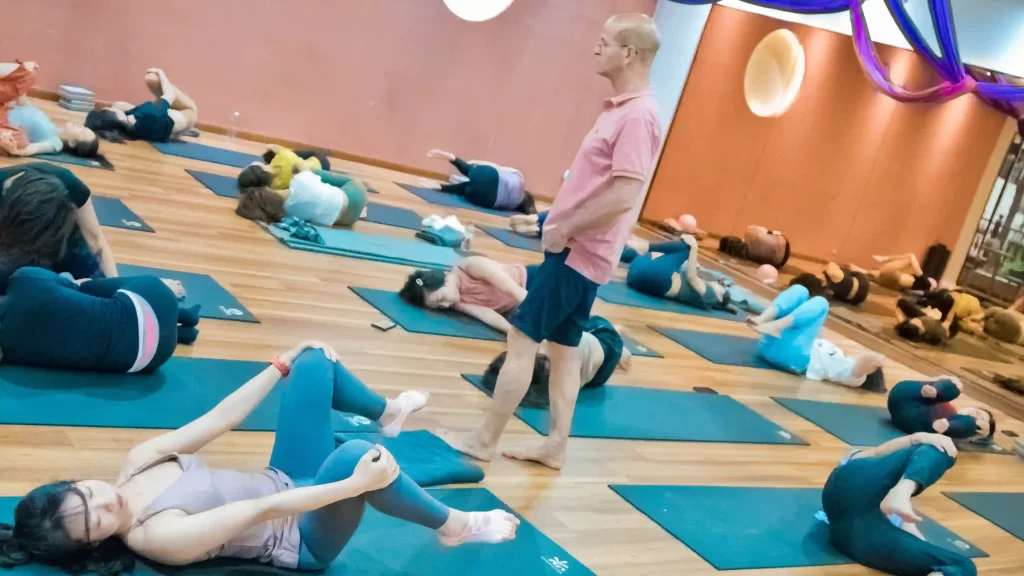
The first time it occurred, I was caught completely by surprise. After teaching an Awareness Through Movement® (ATM) session, I suddenly realized I was feeling physically different. My own body was mirroring the exact sensations of the lesson, as if I had been on the floor experiencing it myself.
What a nice surprise! This was immediately followed by the question, “Is it an illusion?”
Indeed, I have always been skeptical of “brain tricks,” yet I am equally curious by nature. As I continued to teach, it happened again and again. Driven by this curiosity, I began to investigate how a physical shift could occur in my own body while simply standing and guiding a group.
Here is what I found in scientific publications to explain this phenomenon.
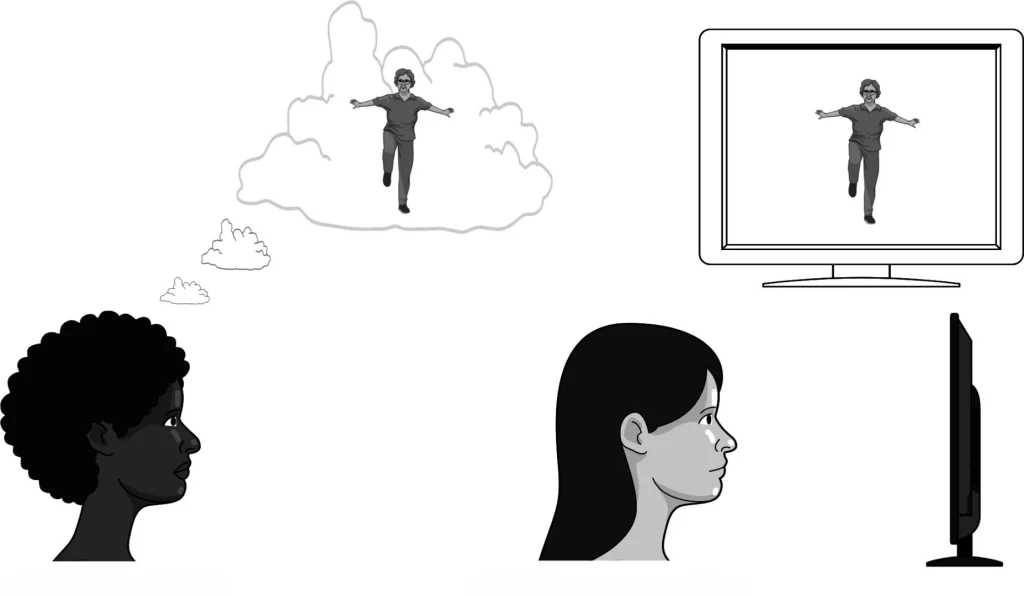
Recent neuroscientific research confirms that the brain does not distinguish between a movement executed and a movement vividly imagined as sharply as we once thought. This process, known as Motor Imagery, is rooted in the activation of the Mirror Neuron System.
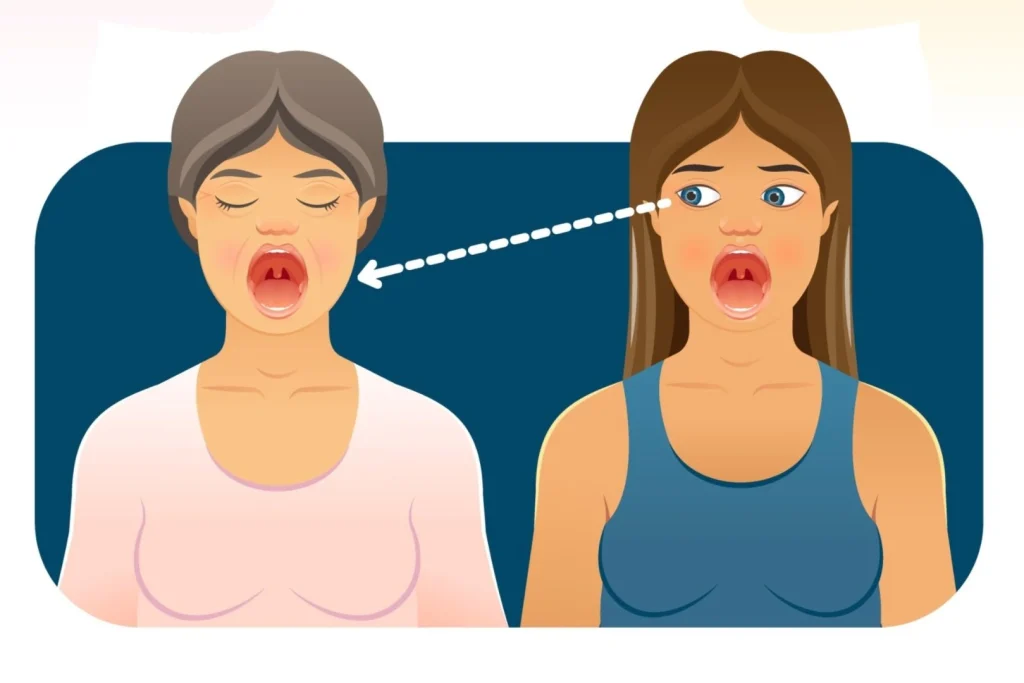
Mirror neurons are a class of visuomotor neurons that fire both when an individual performs an action and when they observe that same action performed by another. According to studies by Grezes & Decety (2021), action observation and mental simulation share the same neural circuits as physical execution. This “offline” activation allows the nervous system to “re-map” and refine the cortical representation of the body without physical strain.
This efficiency is a cornerstone of what is often called Computational Efficiency. The brain operates on roughly 20 watts of power, yet it can maintain and update complex internal maps of the body through observation alone. For individuals whose internal “map” has become blurred—due to trauma, chronic pain, or surgeries such as those for breast cancer—Motor Imagery acts as a powerful rehabilitative tool. It allows the brain to “re-learn” movement in a safe, pain-free environment, bypassing the physical limitations of the injured tissue.
Furthermore, this neurological simulation directly influences the Insula and the Limbic System. When a body part is traumatized, the brain often labels it as “under threat,” triggering a protective “guarding” reflex. Scientific evidence suggests that by utilizing Motor Imagery to visualize fluid, non-threatening movement, the nervous system can de-escalate this “alarm system,” replacing the memory of restriction with a renewed sense of safety and fluidity.
This is not to say that mental simulation replaces the efficiency of physical execution. When we actually perform a movement, the brain relies on Afferent Sensory Feedback (the real-time data from our muscles and joints) and the Efference Copy (the brain’s internal prediction mechanism) to instantly calibrate and sharpen its neurological maps. However, as I have witnessed in more than 10 years of teaching and caring for people, when properly organized, Motor Imagery serves as an incredibly powerful gateway for rehabilitation when physical movement is compromised.
Understanding these mechanisms has profoundly enriched my perspective of teaching Awareness Through Movement and Functional Integration®. My own experience has become a pillar of my understanding, transforming what began as intuition into a scientifically proven truth.
This phenomenon of “feeling along” with the group is not an illusion, nor is it the commonly used phrase “energy exchange”; it is a measurable biological resonance.
Beyond a deep understanding of biomechanics and psychology, teaching an ATM class requires a delicate combination of acute observation and sensory empathy. In the process of teaching, I must internally simulate the movements in my own brain before I can effectively formulate the verbal invitations for the group, thereby activating Motor Imagery within my own nervous system.
I observe a student’s struggle or ease, my brain simulates the mechanics, and then I feel the resonance in my own body. This process has become a vital support for me; it allows me to guide my students with much greater precision while my own somatic system benefits from the very refinement I am teaching. I am no longer just “thinking” about movement; I am harnessing the quiet power of our imagination to help rebuild ourselves from the inside out.
不要忘记查看我们即将举行的活动和课程的日历。
Don’t forget to check the calendar of our upcoming events and classes.